Tuesday, June 4, 2013

Cambodia with GO


I met Bora on my first day in Cambodia. He looks like the prototype young associate you'd see in financial districts the world over: slightly built and smartly dressed, with short hair, wire-rimmed glasses, an easy smile and earnest, eager eyes. His work schedule would make any young investment banker jealous; he's only in the office 20 percent of the time, spending the remaining 80 percent in the field with clients. 

Bora's boss, Vichetr Uon (pronounced "vee-chet"), was born in 1979, a time of great strife in the former Khmer Empire. A young man by Western standards, Vichetr's considered old in Cambodia, where as many as three million people of his father's era were murdered by the brutal Khmer Rouge regime, eviscerating an entire generation of intellectuals and leaders whose ideas threatened its existence. Vichetr's father was one of the victims. 

Bora and Vichetr live and work in Kampong Speu, an outpost an hour outside Cambodia's capital, Phnom Penh. It's a quick drive out National Highway Four, past the textile factories where Old Navy t-shirts are made for pennies, where rules of the road are merely suggestions, and scooters zip by carrying entire families of four. On one bike.

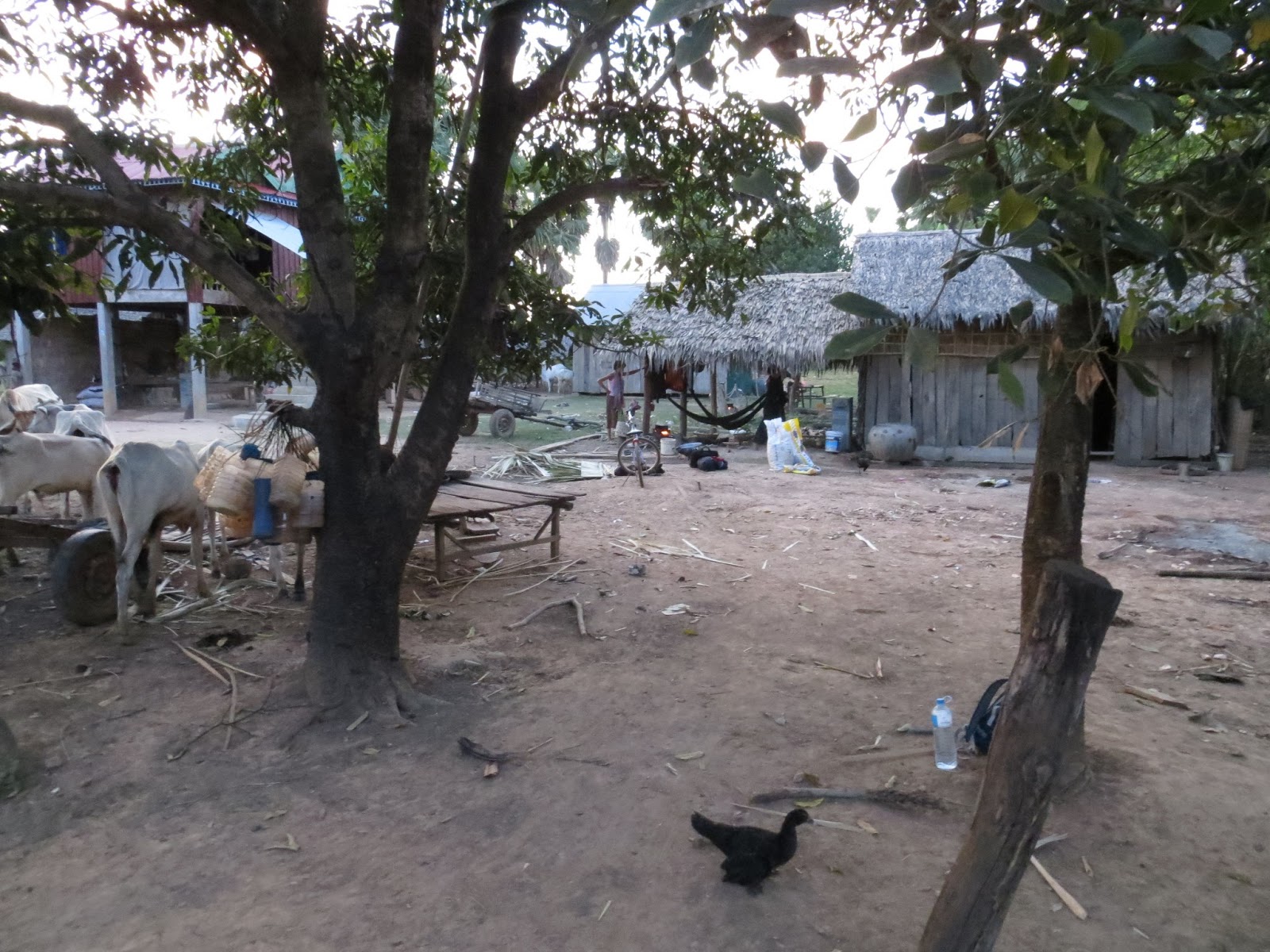
That's where you see the real Cambodia, tucked away from the main road. A vast maze of dirt roads delivers you to the villages, where 80 percent of the nation's population lives in a kind of squalor tough to comprehend for a Westerner like me. Dirty green ponds supply drinking water; skinny white cows mill about next to the ramshackle huts the families call home, staring longingly at the mangoes and rice and whatever else is for dinner that day. And then there are the kids. Everywhere kids. Five of them for every adult. Data here are murky, but somewhere between 50 and 60 percent of the population is under the age of 22, a sobering reminder of the Khmer Rouge's genocide.

This is where Bora spends 80 percent of his time. He works for Vichetr's Sao Sary Foundation (SSF), doing the kind of work this country desperately needs. Together, they spend their days drilling wells in villages and installing water filters in huts, bringing families clean drinking water for the first time. They rescue kids from families who can't afford them and put them in school instead; saving them from being sold as forced laborers or tragic suppliers of the world's oldest profession. Vichetr educates villagers on basic concepts like saving for tomorrow - literally tomorrow, the day after today - to lessen the crippling grip loan sharks have on the village population. 

Vichetr teaching villagers about basic budgeting

And all of this comes for a price. If the villagers don't maintain their wells and filters, they lose them. Vichetr realizes that merely handing out things for free won't kill the fatalism that pervades in Cambodian society. He knows the path forward involves education, helping people create new habits that could turn around a culture whose people can't help but feel like the losers of a global game of wealth and security. Both Vichetr and Bora have an impressive work ethic, and each admits to crying sometimes when villagers don't hold up their end of the bargain, allowing their filters to fall into disrepair. 

But that doesn't deter them. It just means the work is nowhere near complete.


Bora and a BioSand filter

GO to Kampong Speu

Last Sunday, I met up in Phnom Penh with a delegation from Groundwork Opportunities, a San Francisco-based nonprofit with a simple, ambitious mission: to end extreme poverty. Founded and run by Bart Skorupa and Jenny O'Connor, GO scours the developing world for social entrepreneurs just like Vichetr: locals who are working in their homelands to combat poverty. Their model is relatively simple. Find people who are doing good work but need money and material support, and pair them with champions in the West who help provide those things. Unlike some NGOs who fly in and out without much follow-up, GO focuses on the data, making sure to track the results of every dollar donated, and guarantees that all donations make it to the field. Overhead is handled separately. A couple of times a year, Jenny and Bart bring groups to meet their partners on the ground and see the work they're doing.  There's no special qualification to join the trip ("just an open heart and an open mind," Bart told me when I met him for lunch earlier this year), and while several members of our 13-person team had already done something tangible to support GO's work, I merely tagged along to see what it was all about. 

And this is how I spent the week. Watching guys in t-shirts and bare feet install wells in villages while skeptical kids looked on. Helping build and install BioSand filters, miraculous little cement boxes that kill the bacteria in well water, bringing for the first time drinking water to huts that previously had to lug buckets of water from dirty ponds and boil it to make it safe. I stayed at a guest house started by SSF, where girls rescued from a future as sex workers are taught the hospitality business. I taught an English class in a village outside Siem Reap, at a school started by a Cambodian named Vey Lav in 2006; it's supported by Western donors and fees Vey ("way") earns from his tour guide business. I ate lunches in villages prepared with care by host families, eating unpeeled bananas and mangoes, chicken that was mostly bone, and ants. Yeah. Ants.

WATER!

And maybe I destroyed a perfectly good rough silk shirt, a highly traditional fabric in these parts. But that's a story for another time.

Elma School, Siem Reap

Vey is an entertainer; frankly, it'd be more efficient if - like the Joker - his mouth constantly formed a smile, because that's what he's doing most of the time. He hadn't even met our whole group before he was climbing a palm tree and bringing us its juice to drink. He wrapped a scarf around his head for a photo op, then perched dark shades on the face of a 60-year old village woman for a photo of her own. One day, when we all grabbed lunch on the long bus ride to his hometown of Siem Reap, we'd barely gotten our food when he grabbed his plate and thrust it in the face of a total stranger, lest they miss the chance to smell the fish he ordered. 

Vey being Vey

Vey studied English literature in University - his favorite book and movie are both Love Story, "Ali McGraw and Ryan O'Neal, so lovely" - and that's where he got the idea to teach English to the kids of his hometown. His school doesn't look like much: just two small cement buildings, three classrooms, a library, and a courtyard where the kids play soccer and volleyball. But here the staff teaches English to 288 students out of donated books with donated pencils, markers, and white boards. Say what you will about cultural imperialism, but learning English, in today's world, means one essential thing: opportunity. 

The kids here are the same as kids anywhere. Quick to pick up new concepts. Always ready to laugh. Much better than me at paper, rock, scissors. Huge fans of Angry Birds, even though there's no chance they've ever held a smart phone, let alone played the game. Pure, innocent, ready to be molded; generally well behaved, afraid to make mistakes in front of their friends. You know, kids.

Class, repeat after me: "Hello, my name is Kevin"

Kids, presumably not named Kevin

A few years ago, I did a six-week course with Junior Achievement in San Francisco, teaching second graders at a school in Chinatown the basic economic concepts "want" and "need." We'd show them pictures of things they could buy and ask them to identify which it was. Water? Need. Playstation 3? Want. Cheeseburger? Want/need, and so on. Standing in front of the kids at Elma School, kids who farm half the day and go to school the other half, who opt to spend an additional hour at Elma so they can learn English, who live with their families in huts the size of my living room and count toilets and t-shirts among their extravagances, who aspire to be tour guides and teachers and anything but beggars and sex workers, I was reminded of that lesson I gave about wants and needs. Only this time the kids were teaching me.

Cambodia's Future

Vichetr, Bora, and Vey are the Sergey Brins and Steve Jobs' of Cambodia, the bold visionaries who see a problem and dare to try and solve it. They're Indiana Jones in that cave searching for the Holy Grail, stepping blindly into the great divide, having faith there's a hidden rock or something there to land on, knowing that falling into the crevice is better than turning around and walking away. 

Sometimes, when he's not laughing, transitioning into a British accent to crack a joke, or spontaneously climbing a tree, Vey's demeanor changes, his voice gets lower, his eyes fix on a spot in the distance instead of darting around to make sure he sees everything in the room. He starts to talk about Cambodia, about the political challenges of de facto single-party rule, of stagnating nepotism and history books that scrape away entire sections of Khmer's plight. "Sometimes I lose hope for today's kids," he told me one night. "They'll never know what happened here. History is told by the winner and we didn't win."

I know I've only been here a week. I didn't know anything about Cambodia a week ago, and I still don't know much now. I know nothing about the leadership vacuum created by Pol Pot's genocide, or the cultural forces that kept this country poor while much of the world got rich. I know nothing about the post-Khmer Rouge agreements that Vey thinks ceded too much power to Vietnam, potentially shielding kids from a history they should learn so there's no chance it gets repeated. And I've seen only a tiny glimpse of their problems. 

But I do know this. There is hope for these kids. I'm not naive; I know the incremental nature of change means we're generations away from a fully-developed Cambodia. But Bora and Vichetr and Vey grew up here. They're products of the very system that, in their more defeated moments, each can sometimes doubt. And they're taking it upon themselves to change it, one step at a time.

I have a few ideas on how to help, and Bart and Jenny have identified several projects that need support. When I get home in the fall, I'm probably going to ask you to give us a hand. Stay tuned for details.

Aim high


Building filters

Delicious ants

In Thailand now. Scuba school all week. 

Until next time…

Friday, May 24, 2013

Au Revoir, Europe


…and we're back. I reached the two month mark on the road this week, which can only mean one crazy thing: today is the day I've been dreading since planning this trip. It still beats a great day in the office, but I left my hotel this morning at 3:55 AM to catch the first of four flights over 24 hours that'll end with me in Cambodia. Here's the rest of my "day" - Istanbul >>>> Abu Dhabi >>>> Bangkok >>>> Phnom Penh. Should. Be. Bueno.

I've spent the past week staring longingly at Asia from the European side of Istanbul, a gorgeous mess of a city that straddles the official line dividing the two continents, the Bosphorus. More on that later. Here are some highlights of my final two weeks in the old world:

Switzerland

After leaving Italy, I shot up to Zurich for a rendezvous with my buddies Evan and Crystal. Evan's uncle, a Bay Area native, left the US for Switzerland during the Reagan Administration and never looked back, settling along the banks of Lake Zurich with his wife and son. Over a deliciously traditional Raclette dinner, I learned a lot about what makes the Swiss economy the most competitive in the world. To wit:

1. Counties (called cantons) compete with each other for residents and businesses, often negotiating tax rates directly with the businesses and residents themselves. 
2. Echoing Tip O'Neill, all politics in Switzerland truly is local. Any development, within a canton or one of its municipalities - a new road, new street lights, a new soccer field - is subject to a referendum, making direct democracy an actual fact of life and forcing residents to take ownership over their vote.
3. All residents' income and taxes are public information, providing ample motivation to pay your fair share.
4. While university is paid for entirely by the government, only 13% of students qualify and 10% of them are cut after their first semester. 

There's a lot more where that comes from, but the main economic hallmark is clear: competition. Institutions designed to foster competition create a competitive state. Seems simple enough, especially in a country surrounded by mountains and small enough to drive across in half a day. I'm dubious the same thing could happen in large measure in the States, though. Sure, Texas can try to lure Californians with its favorable tax situation, which is why we get so many visits from Rick Perry into our Golden State. And yeah, lower state income tax rates would be great. But then you'd have to live in Texas. (I know, I know, and I agree. Austin IS awesome.)

I spent the rest of the weekend visiting with my buddy Ian, the burger mogul I mentioned a month ago, who has a house in Zurich and a thriving chain of restaurants throughout Switzerland called Holy Cow. Thanks to Facebook, I learned that my cousin Jessica and her boyfriend were also in Zurich for a six hour layover on their trip home from a medical school rotation in Kenya, which is totally awesome. Not awesome? I learned about it when they were boarding their flight home. Noooooo! So sorry I missed you, Jess. Next time, I need to heed that strange disturbance I felt in The Force. It can only mean a beloved family member is nearby. I must have skipped that day in Jedi training. Lesson to all you kids out there: go to school.

Zurich power lines
The Gibbon-Aydelott Juggernaut

Budapest

Then I spent four days in Budapest, a lovely city bisected by the Danube River with that special kind of beauty reserved for hilly cities next to water. Hungary still feels like it's emerging from decades of communist rule, even though the Wall fell more than 20 years ago, and its history is stuffed with tragedy: they've constantly been invaded, conquered, overthrown; their bridges have been destroyed and reconstructed, their churches and castles miraculously spared, keeping it a very worthwhile destination. I went for a run to check out the architecture with two girls starting a running tour business - Eszter and Lidia - and their determination to launch something in a country still feeling its way around capitalism was downright inspiring. "It's very hard to start a business in Hungary," Eszter explained. "In America, if you have a good idea, people are happy for you and want to help. Here they get jealous and try to stop you or steal it." 

She also apologized on behalf of the country for a dodgy lodging situation I chose of my own volition, and blamed herself when I couldn't get into the restaurant she recommended because I asked her where to go too late. Basically, Eszter is the nicest person in the world. Here's hoping Running Tours Budapest thrives.

Budapest Running Tour - nice shirt!
Budapest

Panorama


Istanbul

I made it to Istanbul last Friday, extremely excited to meet up with three of my good friends from SF: Julie, Veronica, and Gina (who stayed in Italy last week while I headed north). Not long after I arrived, we whisked ourselves to dinner and a night on the town ushering in Gina's birthday at a few establishments of dubious repute in Beyoglu, a pedestrian-friendly neighborhood full of bars, clubs, and restaurants, some of which charge men more than women for the same round of drinks. Boo.

Istanbul is an amazing place; as physically gifted as San Francisco or Seattle, with natural vistas and hulking bridges high above its waterways, it's uniquely positioned to marry East and West. Like most of Europe - we only crossed into Asia to hit the airport - its cobblestone streets zig zag with little organization, and they catch more than their share of flip flops (causing the clumsier among us to trip several times a day). While officially a secular state, Turkey sits at the nexus of the Islamic world; it borders Iran, Iraq, and Syria, and its population is predominantly Muslim. In case that wasn't clear, there are five daily reminders that you're indeed in a different part of the world: the solemn, eery calls to prayer from a godlike voice echoing above the city. Whereas the skylines of Stockholm and Copenhagen are marked by myriad ornamental spires, Istanbul's landscape is dominated by the minarets of its seemingly uniqutous collection of mosques. And while not as prevalent as some of its more overtly religious neighbors, it is still very common to pass on the street several women clad in black burqas, every body part covered but their eyes and fingertips. 

About those Turks. There are a few new world ideas they haven't yet adopted.

1. Lines are an essential pillar to orderly society. Wait your turn!
2. Men should be subtle when checking out ladies they find comely. Staring them up and down is kinda creepy. 
3. Being creepy is a bad thing.
4. Men should use deodorant. Like, everyday.
5. Men and women can be friends. Honest. Just because a guy is walking around with three ladies doesn't mean he's a pimp. Or a sultan to be admired, though he very much appreciates the nickname.
6. It isn't necessary to put a flag on every building. Even if it's one of the coolest flags in the world.
7. Your food industry is supposed to drench the cuisine in butter, deep fry frozen meats, and overindulge on artificial ingredients. As a result, I think it's possible that Turkish food is the best in the world. Absolutely delicious.

In one of the more surreal days of my trip so far, I scored an invite to a black-tie event at a museum owned by the richest man in Turkey. A friend of a friend has some clout in town, so after being told I needed a tux, it took me two hours to be fully suited up and ready to go, Pretty Woman style. Thank god I didn't have to eat anything with a funny-looking fork, because I definitely would have shot it across the room. And now I have some James Bond pics from a night out in Istanbul, which we can all agree everybody should have. 

Ballin'
The girls at Boo Mosque

We were each interviewed on camera by young Turks learning English. Adorably. My interviewer was the least experienced. His first question: "are you learning English?"

Galata Bridge


Yerebetan Sarayi - Turkish for "Air Conditioner"


Vern stuck in a mirror, Superman style

Farewell, Europe

And that's a wrap. After setting foot in 13 countries, reuniting with several old friends and making countless new ones, my European Vacation 2013 is complete. When I land in Cambodia tomorrow morning (around 7:00 PM Friday night in SF), I'll meet up with the delegation from Groundwork Opportunities and begin my volunteer project in Siem Reap. I'm sure to write all about it in a week, so stay tuned for that. It promises to be different than anything I've done before. After that, I make it to Koh Tao (Thailand) on June 3rd for a weeklong scuba diving course, and the beat goes on.

Until next time...

PS - The girls and I created a Spotify playlist as a soundtrack for our trip to Turkey, appropriately named "Turkish Delight." It's full of reminders of what happened while we were here, but we're missing one key track. Does anybody know a song that will remind us of the time that one of us played euchre for the very first time (in their whole life) but still felt the wrath of another player for misplaying one measly hand? If so, let me know in the comments. It'll make our soundtrack complete. 

Wednesday, May 8, 2013

Rome. And Reunions.


After another great weekend in Sweden (more on that later), I met up with my buddy Gina in Rome to travel around Italy a bit. She works for a damn progressive company that gives a one-month sabbatical after five years on the job, which every company in the history of ever should do, and we quickly started doing the kind of things you do when Gina's involved. Stuff like crashing a birthday party, visiting a "gourmet food store" that her friend recommended only to have the owner of a swank restaurant drop everything and hang with us for a bit, and meeting up with some Italian friends of her dad's for a Gina-reception at a bar teeming with Italian TV stars. She deftly dodged two smitten Italians who were stoked to learn we were buddies, not datings or marrieds. One bloke pulled the trifecta the next day hoping to score a date with her: call/voicemail, email, Facebook message. I respected his persistence; she still resisted. Boo, Gina. Boo! Give the guy a chance! One night, we found a karaoke bar that was open until 4 AM. She sang with some new friends. I watched baseball. As you do in Rome.

Stefano, Gina, and their mutual American friend who hangs on the wall

I don't understand why Italians aren't fat

Like everybody else, I've read all about the benefits of the Mediterranean diet, so I was pretty excited to get down here last week and indulge in all the health. Bread. Pasta. Cheese. More bread. More pasta. More cheese. Cannoli. Gelato. Wine by the gallon. Pizza. I could feel the kilos shedding after every meal. 

Just to confirm, the magic Mediterranean diet is just about being in the Mediterranean and eating food, right? Thought so.


Something called "pizza"
A whole lot of delicious

Home made Pici, native to Siena. Spaghetti on HGH.
Vino Whitey

Just in case I'm doing the Med diet wrong, I'm lucky that Rome is the kind of place you want to walk around in. After engaging in my new favorite tour - the six-mile guided jog through town to see the sights - I spent the rest of the week walking the city. Several hours and kilometers a day (when in Rome, we use the metric system), up the Spanish Steps and by the Trevi Fountain, the Colosseum, the Pantheon, Vatican City, across the River Tiber to the lively Trastevere neighborhood. In fact, like Magellan before us, we circumnavigated an entire country one day last week when we got lost looking for the Mouth of Truth. No small feat, even if it's the smallest country in the world.

From left: Russell Crowe, me, annoying tree branches, Colosseum

Trevi Fountain, a big stop on the running tour
Straw-hat photobomb

The Bridge of Angels leading to Vatican City


"And I have seen the David, seen the Mona Lisa, too"*

*bonus points if you can identify the song without Googling it. Or binging it, if anybody actually bings.

Then it was off to Firenze, the birthplace of the Renaissance and the prototype for countless suburban developments in Central California trying in vain to recreate the authentic charm of Tuscany. As trite as it sounds, the Statue of David is incredible. Whereas the Mona Lisa, Starry Night, and Persistence of Memory don't look much different in person than in pictures, David comes alive before your eyes. I don't think I realized how big he is - I blame Goonies - and 10 minutes staring at the once-discarded chunk of marble was well worth the hourlong wait in line.

Also rented a car and drove to Siena - a maze of a city that's home to the world-famous Il Palio horserace - then stopped at one of the most accommodating and gorgeous wineries I've ever been to, DieVole in Chianti. Show up without a reservation and want lunch, too? No problem, but only if you'll have four courses and coffee for about 30 bucks. Want a wine tasting for only 12 Euros ($15-16)? Sure, but only if you're okay with getting a private winery tour - drinking the best reds in the wine cellar - and complimentary grappa afterward. Twist my arm.


They've been making red wine there for over 900 years, when two intrepid winemakers rented the 1,000-hectare (~2,200 acres) plot from the Catholic Church for quite a haul: two chickens, six silver coins, and three loaves of bread. Most of the grapes are Sangiovese, exposing a fundamental difference in wine culture between the US and Europe. We Yanks identify our wine by the grape; Euros name it after the region. Chianti Classico is mostly Sangiovese and pairs well with fava beans, at least according to Hannibal Lecter. If we made the same wine in Sonoma, we'd call it a Sangiovese, not a Sonoma. Which is good, considering that the climate is changing and "a Sonoma" may be completely different in 50 years.

Now we're in Positano, down on the Amalfi Coast, and, well, I can't lie. It's stupid how beautiful this place is. Hit up a ridiculous restaurant last night with the people from the hotel, arranged by Blake Costanzo's very gregarious papa. We devoted significant time to discussing how the Niners would have won the Super Bowl if they hadn't let Blake go, pouring huge crystals of sea salt into my still-gaping wound. 

But, oh, the Amalfi Coast - I won't muck it up with words; check out some pictures. 

La Mer

Papa's own invention. No idea what he calls it.

When the moon hits your eye...

Bench
"Footpath of the Gods"

Reunion

There's nothing quite as life affirming as the reunion; meeting up with a friend you haven't seen in years and realizing nothing has changed. The jokes are the same, the old stories feel like they just happened, your memory spits out minute details of things you did 10 years ago that you'd forgotten you could still remember. I've been extremely fortunate the last seven weeks, meandering around Europe from one reunion to the next, repeatedly entering that time warp that somehow wipes away all that's elapsed in the interim. Even so, last week's reunion was a first: the longest gap I've ever gone between visits with a friend.

There was a year in the early 90s where you'd have mistaken Niclas Lindberg for the third August brother. From the first day he moved in with my grandmother - an exchange student from the south of Sweden - he and my brother Jeff were inseparable high school seniors in Lemoore, CA. I was fortunate enough to land a second older brother - one with a funny accent and very different perspective on the world - and I still very clearly remember the day he left in 1993, shoulders slumped as he walked toward his flight away from Fresno Air Terminal.

Last Sunday night, Niclas picked me up at the train station in Kristianstad, Sweden, 12 miles north of his hometown, Ahous, home to 10,000 people and one very famous vodka distillery (Absolut). It was the first time I'd seen him since that day at the airport 20 years ago. 

Ahous - tallest building on the right is the Absolut distillery


The lines in his brow are etched a little deeper, his stubble is thick enough to be called a beard and specked with bits of grey, but nothing else about Nille has changed. He still says "yeah, but" when making a point he really wants to emphasize, and he still carries a "no worries" approach to every little obstacle that comes up. He's grown up, for sure, and he has the family to prove it: his lovely Brazilian wife, Tatiana, and three beautiful kids, Valentina, 12, Oliver, 11, and baby Gabriela, five months old. I'm pretty sure I won over the two older kids when Oliver realized we had the same pair of kicks (sweet Vans, albeit in three different colors). I also got to confirm for Tatiana that Niclas did, in fact, bring the house down at the LHS Felix Awards when he and Jeff performed their original song, Phoenix. I believe her exact words were "so it really is true?" in a tone that revealed a long-held skepticism.

Niclas and Valentina
Niclas, Tatiana, and I sat up late drinking Spanish wine and talking like old friends do. The story of how they ended up together is real but sounds like fiction; Niclas asked me about people that he remembered but I haven't seen in 15 years; we planned future meetups before 2033, and even a potential relocation for the Lindberg family to San Francisco. Niclas is a software developer with a social-marketing internet startup. Sounds about right. 

At some point in the night, I realized how big an impact Niclas had on my life. It's not too dramatic to say he inspired me to see the world outside Lemoore, California, the US and A. I told him so, and I'm really glad I was able to. It felt like I was spending the evening with family. 

Hey, here's a picture. Rumor has it worth a thousand words.

Egads! Always remember to take pictures. 

Rounding the bend on Europe

It's hard to believe, but my European tour is nearly complete. I'm headed to Zurich this weekend, then it's Budapest and Istanbul next week before I head to Cambodia. For giggles, here's the roster of countries I've visited so far.

UK (England)
Sweden
Denmark
Norway
The Netherlands
Germany
Switzerland
France
Poland
Italy

NEXT UP: Switzerland (again), Hungary, and Austria or Serbia (TBD), then Turkey. I was very tempted to book a ticket to Tel Aviv the other day, but then Israel started bombing sites within Syria. No bueno.

What a ride.

One bit of news from the real world: I have a job! Starting Sept 1 in San Francisco. Pretty awesome to have that waiting for me. Now I'll forget about it and live it up for four months.

Cin Cin!


Friday, April 26, 2013

Dos and Don'ts

It's hard to believe, but I crossed the one-month mark on the road last weekend, promptly celebrating in London with two of my buddies from SF who were in town for work, Gina and Julie. London greeted us with the sunniest day I've ever seen in England - the kind of day George Harrison must have been singing about - which we somewhat squandered when the gals took naps in the early afternoon. Sorry, ladies. Them's just the facts. 

Pre-nap in Sunny London

Post nap - all better
 They made up for it later in the day, though, when we celebrated 20/4 in style: wait. How does that work in Europe? Is a 20-4 a punishable offense? Damn you and your logical-date-styling ways, Euros. 4/20 is easier to use as a counter-culture holiday. 20/4 is just a cumbersome way to write out Kiefer Sutherland's TV show. I repeat: Damn you, Euros (and rest of the world who all write out the date from the smallest increment to the largest, day/month/year.) I don't care if it makes more sense. Just do it our way. 

And now that you mentioned things that make logical sense but hurt American brains: the metric system and Celsius. Come on!

Small perturbances notwithstanding, we managed to have a lot of fun, visiting Ryan and Loni's local and spending the night talking 'merica with a few cool Irish dudes. And it gave me an idea: in honor of my first month on the road, I've devised a handy list of rules I've come up with so far.

Here they are:

DOPack light. No matter what you bring, you're gonna hate your clothes. Even your favorite npr t-shirt. Hard to believe, but I'm sick of that damn thing. And my two favorite pairs of jeans? Ready to chuck 'em and spend too much on new ones. The every-other-day rotation has stopped fooling me into thinking I brought more than two pairs. But you know what you're gonna hate more? Stuffing everything you own into a suitcase every week. That. Sucks.

(I know, I know. You're holding the world's smallest violin.)


DO: ask "is it okay if I speak English?" Even when they look at you and say "of course" in a way not designed to come across as smug as it does, it's nice not to assume they'll just ignore the language their country has been speaking for centuries for the foreigner who thinks he rules the world. And even though you'd be screwed if they ever said "no," it's still the polite thing to do. Unless...

DON'T: ask if it's okay to speak English when you're in England. They don't care that you just spent three weeks on the continent, and they're only too happy to add yours into their cache of "dumb American" stories next to the girl who asked them if they had African-Americans in England and anything Homer Simpson ever said. Noooo...I didn't actually do that. I'm just helping you out, in case you're ever traveling yourself. Got to protect our Yankee rep. I'd never do something like ask an English person if he speaks English. 

Okay, I did it. But I had just spent three weeks on the continent, and I was on four hours sleep. Don't be like that English guy and look down your nose at me. Cut me some slack! And yes, African-Americans do visit England, but I think she was asking if there were black English people. Which there are, of course. They wouldn't be American; they'd just wish they were. 

ZING!

DO: Play the SIM card shuffle. I've had three phone numbers already, but these iPhones sure are useful when on the road. I'm sure Androids would be, too, if you have bad taste in phone operating systems, since they allegedly offer the same vital services we've all become dependent on: maps, email, pictures, texts, games, music, proof that your bit of trivia is right, restaurant recommendations, etc. (Google maps and I are back on speaking terms after our rocky start) It's no different on the road, and since SIM cards are cheap, I highly recommend buying a new one each time you hit a different part of the world. Look no further than the kind of stuff people will do when they don't have cell coverage for a few days. They do super weird things, like ignore friends they haven't seen for a month because the London pub they're in has free wifi, allowing them to play Candy Crush Saga for the first time since Friday. Then they blame it on Baruch, who got them started on the game in the first place. It's usually a good strategy to blame it on Baruch, but I'm not buying it this time. It's just easier to get a local SIM card. Right, Jules?

DON'T: Fall in love with your plans. To quote my prescient cookie fortune: be prepared to change your plans. And I have. A lot. I may have once said I'd go to the Baltics, to Morocco, to three continents, "maybe more." But nope. I scrapped the Baltics and Morocco entirely, opting instead to spend the next few weeks in Italy. All it took to change my mind? Three weeks in Northern Europe in April, and one brown puffy jacket I got sick of wearing. Bring on the flip flops, pasta, and vino rojo. But I'm still thinking I'll end up in three continents before it's all said and done. Substitute Australia for Africa, and we've got our third.

I think.

DO: bring interesting t-shirts. My nickname in Copenhagen was "Google Maps," because I wore that awesome shirt my buddy Adam Hughes gave me a few years ago. Consider your shirts a sartorial icebreaker. Just trust me. It worked again last night, introducing me to my new best friends from Brazil who almost made me miss my flight this morning. Good people, Brazilians.

DON'T: convert the following currencies back to dollars when paying for stuff: Swiss Francs, Norwegian, Swedish, or Dutch Krone(r). You're just gonna want to punch someone, and it's not productive. Just buy your $14 extra value meal at McDonalds, recognize it's the same two all-beef patties, special sauce, lettuce, cheese, pickles, onions, and sesame seed bun that you get at home, and eat it. No need to worry about the cost. After all, you get to go to SE Asia soon, where you won't believe everything costs only $2. 

Side note: never, ever get into a debate about the "Big Mac Index" with a super-awkward American kid who moved to Sweden without a job. He means well, he just doesn't get it. And you'll end up worrying that the reasonable, genial Indian dude you're dining with may actually engage in fisticuffs with him. Which just isn't worth it.

DO: make liberal use of Spotify's offline mode. I don't care what you say, Rdio heds, Spotify's the best. It's comforting to have a few albums in the queue when you don't want to burn through your mobile phone plan's data allowance. My obsession for the last month? ∆'s "An Awesome Wave," (hold down alt-j on your keyboard to make their symbol...cool, eh?). It's like having that old friend who speaks in poems all the time right there with you on long bus/train rides where you don't feel like reading and you already watched the best documentary ever, "Searching for Sugarman." Okay, so I don't actually have an old friend who speaks in poems, but if I did, I'm sure he'd say things like "triangles are my favorite shape" and then justify them with specious support like "three points where two lines meet." And then I'd spend the next few weeks pondering why we need to pick a favorite shape. I thought we'd agreed on needing the following favorites: color, food, restaurant, song, movie, book. That's it. Now we need shapes? Confusing. I'm also pretty sure that my poem-speaking friend would wax one about Natalie Portman's character in The Professional (Leon for the international audience), Matilda, because she was a lovely little sprite. And that I need to find different things to spend my time on.

Here are a few candidates in the contest to be my favorite shape, courtesy of lovely Krakow.


DON'T: tell your fellow travelers that you're the crown prince of Norway slumming it on holiday. Turns out they have google everywhere, and unless you take the time to memorize your wife and kids' names, or learn a few words in Norwegian, you're gonna get caught. Quickly. 

A Tour of Hell

Yesterday, I spent the day in Auschwitz, taking a three hour tour of both camps that are still standing, Auschwitz 1 and Birkenau (Auschwitz 2). I felt compelled to see it for myself at some point in my life, and it's everything you expect; a massive pile of "fuck you, Nazis" that makes you question how humanity even works when it's capable of something like this. Near the end of the tour, we were led to the ruins of the two main gas chambers in Birkenau (the second camp that was designed explicitly to more efficiently kill people), demolished by the Germans in the waning days of the war to hide any evidence of their crimes. Standing there, 10 feet from the spot where hundreds of thousands of people were murdered, I looked across the train tracks to the other side of the camp where a group of tourists were carrying flags near the other chamber. Israeli flags. Five of them, flapping triumphantly in the wind high above the ruins of evil.

Awhile later, as the tour wrapped up and we were leaving, I looked toward the main gate entering Birkenau, the one the trains passed through when they delivered a fresh group of Jews to be slaughtered, 500 people at a time stuffed into railcars designed to comfortably fit 20. And there they were again, marching out through the gate, five white flags flying, a blue Star of David rolling into visibility with each ripple in the wind. 

Of all the unforgettable stuff I saw there - the piles of human hair that were waiting to be shipped to factories to make socks for German soldiers, the pond next to the gas chamber still containing human ashes, the ovens, the "standing cells" smaller than my shower that four Jews at a time were forced to stand in for weeks until they finally died - that's the scene from Auschwitz I hope I think of first till the day I die. Five Israeli flags flapping in the wind, a group of 20 Jews walking freely out of the gate that used to mean sure death, the one that more than a million people crossed through to enter the camp 70 years ago. Five flags carried down a dirt road by 20 smiling, thriving people who just finished touring a museum, now quietly exiting the camp that people like them only used to enter.

Getting in their cars. 

And driving away. 


The Gate


Back in Stockholm for the weekend, then off to Rome next week. 

Shalom. 


Thursday, April 18, 2013

Poker with Carter


I'm in Sweden this week visiting my good buddy, Nick Carter, whom I met 13 years ago on the MLB Road Show and the Brighton Bucs baseball team. In the meantime, Nick's had a pretty interesting run: he went to Leeds University in northern England to study PE, was tabbed as a talented dancer and pursued a career in ballet, moonlighting on the poker tournament circuit to make ends meet, then moved to Sweden for a beautiful girl and a teaching career.

Nick will always star in one of my most vivid memories: September 11th, 2001, my last day in England after a second year on the Road Show. We were spending the day together with Alex, burning James albums onto CDs for me to spread the word in the USA that they were more than just the song "Laid," which, ironically, is still his ring tone today. We were also playing poker, notable only because I had never really played before and was completely terrible at it, a fact that hasn't changed in the 12 years since despite the best efforts of my friends in San Francisco. Sometime in the early afternoon, just past 1:00, Nick's girlfriend called with dreadful news: something crazy was happening in New York. Al and I listened to Nick's half of the conversation, alarm creeping into our faces with each question out of his mouth. 

"What was it, a kama sutra...er, a kamikaze?" 
"How many people are dead?"

Al and I went to the living room and turned on the TV just in time to watch the second tower collapse. Word trickled out about other planes crashing in DC and Pennsylvania, and rumors spread that several more planes were headed for big cities like bombs in the sky. One thing was for sure: I wasn't going home the next day.

We all have a story like this; everybody remembers where they were when the towers collapsed. 

Then came this week.

Monday night, Nick's roommates and I started playing poker around 9:00 PM in Stockholm, the second time in my life I've played cards with Nick Carter. The first strange thing to happen? I won most of the money. Even the worst poker player can have a good night, I guess. I offered to put the guys in touch with Colin, Gilbert, Rector, Jacob, and the rest of San Francisco to ensure I wasn't hustling. The second strange thing didn't come to my attention for 14 more hours: some miserable asshole(s) bombed the finish line at the Boston Marathon, killing three innocent people and maiming more than one hundred more. I spent two hours Tuesday stealing wifi in rainy Stockholm reading accounts from the finish line, the stories of heroism we've come to expect when miserable assholes do this kind of thing throughout the world. People running toward the blasts to see how they can help. Not away from the fire, but right into it. Charlie Pierce - more than just a great contestant on Wait, Wait, Don't Tell Me - put me right there in Copley Square, with the first of many chills-inducing accounts I've read this week. My mind drifted to the Bostonians I know; to my times walking through the Back Bay, on Boylston Street, the miniature books exhibit I saw in the Boston Public Library right on the Square. Then it drifted to the race itself, to my friends who've run The Marathon before, to that incredible achievement of crossing the finish line in the gold standard race; the one only the best runners are allowed to enter. I thought of the time when the explosions happened - four hours after it started - and my ego couldn't help but take me to the time I ran a marathon myself, crossing the line roughly four hours after starting, an emotional ball of exhilaration, exhaustion, and the kind of pride you can only feel when you've done something you didn't think you could. I thought of the people deprived of that achievement that day, mere hundreds of yards from grasping it, nothing like the tragedy happening around them but unacceptable nonetheless.

In one of life's strange coincidences, I've played poker with Nick Carter twice, and each time miserable assholes perpetrated a vicious attack on innocent people back home. Each time, I've been outside the country looking in, instantly uninterested in spending the day in another museum or ancient church, visiting with foreign friends and feeling very American at the same time, taken by a strong longing to be with fellow Yanks who can't explain why they, too, feel under attack, and choosing to ignore the cold, intellectual analysis of the assembled foreigners who implicitly blame the USA for exposing itself to such atrocity. Is America perfect? Of course not. But nobody asks for this.

And tonight, here in Stockholm - a gorgeous archipelago of endless bridges, cobblestone streets, spires, hills and waterways - thousands of miles away from the very real pain inflicted on hundreds of lives at home, completely insulated from the true loss experienced by those families in Massachusetts, I'm getting together with a band of expats and locals to spend my last night in Sweden together. Carter organized it, and it promises to be a great time with great people.

What's on the agenda? Poker, Round Three. Miserable assholes be damned.